
My dissertation project is based on 21 months of comparative ethnographic fieldwork in Toronto, Canada, and Seoul, South Korea. It examines the labour politics of food delivery platforms operated by Delivery Hero (DH), a Germany-based multinational corporation. In 2019, workers at DH’s subsidiaries—Foodora in Toronto and Baemin in Seoul—organized unions in response to the conditions of gig work. Their paths diverged: DH exited the Canadian market in 2020 following unionization, while in South Korea it has retained market dominance and continues to negotiate with local unions.
The research investigates the political, economic, and social dynamics behind this divergence, conceptualizing the making of gig workers as shaped by platforms’ organizational logics, workers’ intersectional subjectivities, and innovative union strategies. It engages scholarship on global precarious labour, labour processes, the construction of the “ideal worker” from intersectional perspectives of gender, class, race, and citizenship, and the heterogeneity and resistance of gig workers. By integrating these perspectives across macro, meso, and micro levels, the study highlights the gig economy as both globally structured and locally embedded.
Publications (and working papers) from this project are listed below.
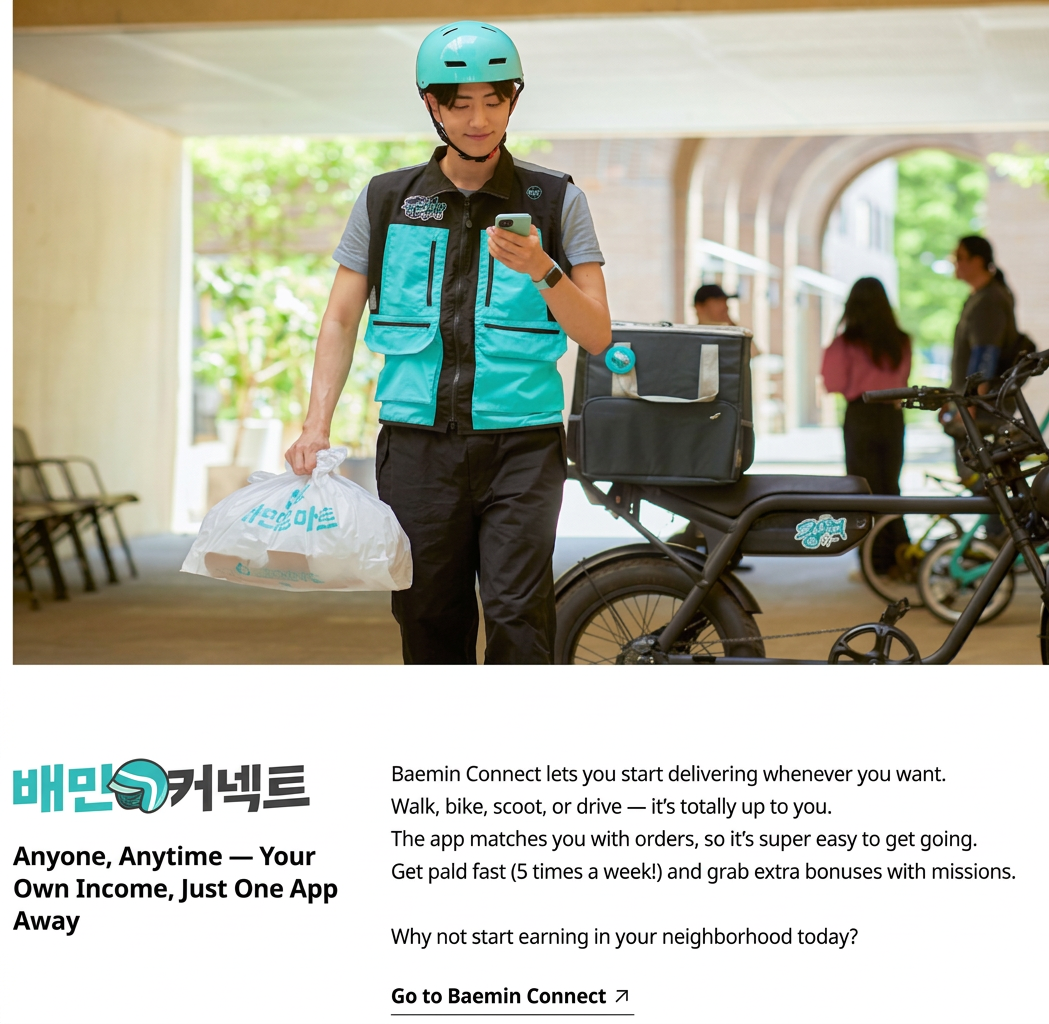
‘Start Without Pressure!’: The Selective (In)visibilisation of Heterogeneous Couriers in Seoul’s Platform Economy (R&R, draft available)
Recent scholarship on platform labour broadly agrees that gig workers are heterogeneous, producing differentiated experiences shaped by their socioeconomic positions. Yet the role of this heterogeneity in platforms’ labour control remains underexamined. This research examines the relational dynamics between divergent worker subjectivities and employer strategy. Drawing on ten months of ethnographic fieldwork in Seoul, South Korea, it examines how Baemin, the country’s largest food-delivery platform, selectively (in)visibilises its heterogeneous workforce in corporate messages. Using feminist insights on invisible labour, it shows how the platform foregrounds its occasional workforce (the Flexible) as its public face while leveraging the legal ambiguity and cultural stigma around delivery work to obscure its economically dependent couriers (the Primary). This article contributes to platform labour control scholarship by proposing corporate discourse as a site of symbolic labour control in which divergent worker subjectivities selectively animate the corporate ideal.
Class identity vs intersectional solidarities: Divergent models for organizing gig workers in Seoul and Toronto, International Journal of Comparative Sociology, 2025
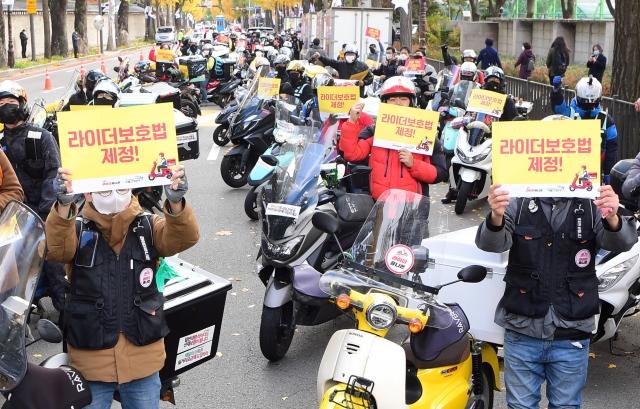
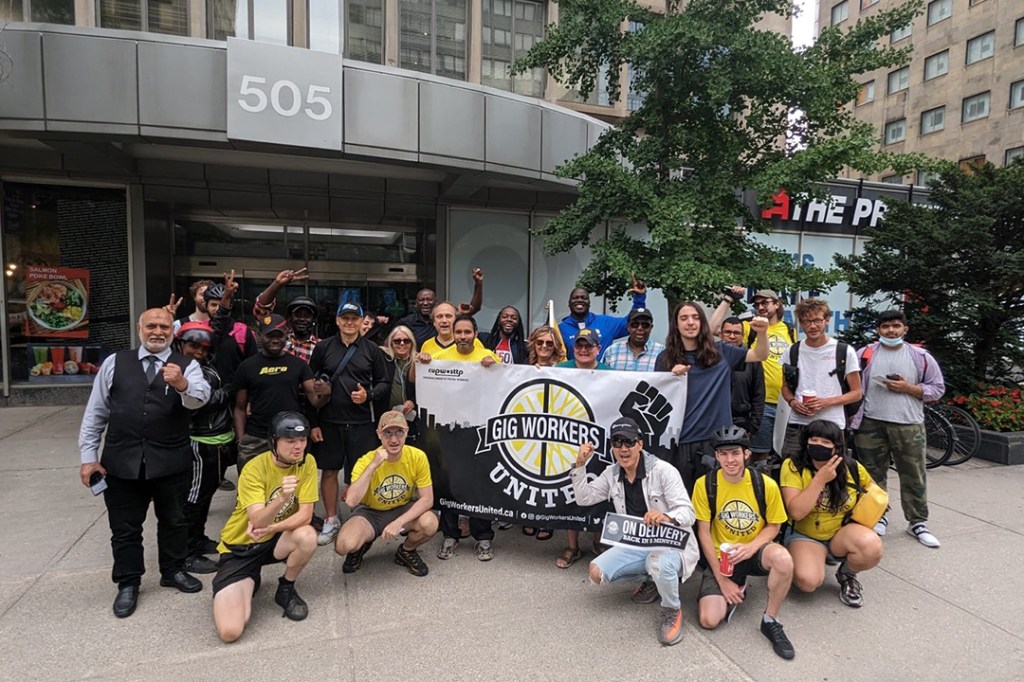
- Graduate Student Paper Award, Association of Korean Sociologists in America (2025)
- I-CSK Student Paper Award, James Joo-Jin Kim Center for Korean Studies, University of Pennsylvania (2024)
Abstract
Studies indicate that gig workers, one of the leading groups revitalizing labor movements globally, have organized by diverging from traditional union strategies. How do they achieve this in diverse local contexts? Drawing on 21 months of international ethnographic fieldwork with gig workers’ unions in Seoul and Toronto, this article examines how and why these two unions develop different strategies for addressing critical crises. Comparative analysis reveals that while the shared labor process and the multinational parent company drive the unions toward new unionism, different worker subjectivities are emphasized by each union based on specific axes of oppression: working-class citizen men in Seoul and racialized immigrants in Toronto. These union orientations are linked to the unions’ distinct histories, including the biographies of founding members. My argument is twofold. First, to better understand rising gig workers’ organizing efforts around the globe, we must consider both global and local contexts. While gig labor processes push gig workers’ unions to move away from traditional union tactics, two key local factors—the workforce’s demographic makeup and union histories—shape their divergent models. Second, it is critical to understand the process of cultivating solidarity—not only building solidarity itself but also deciding which groups to be in solidarity within the local context.
After a Global Platform Leaves: Understanding the Heterogeneity of Gig Workers through Capital Mobility, Critical Sociology 49(1), 2023
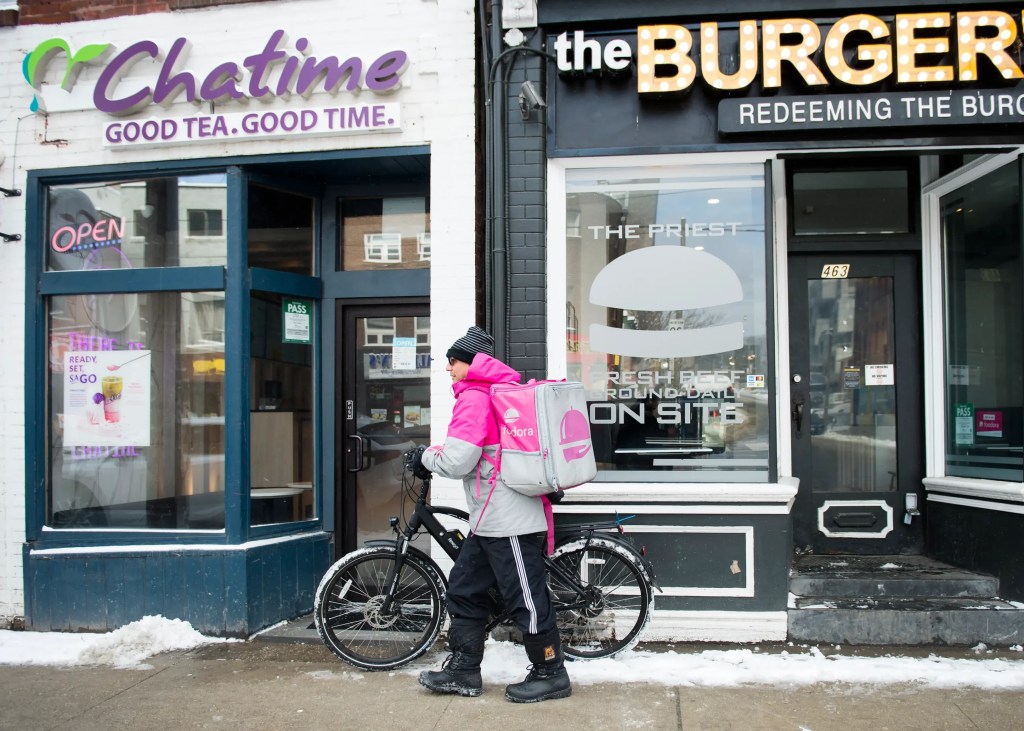
- Dennis William Magill Canada Research Award, The Department of Sociology at the University of Toronto (2022)
- Interviewed in ASA Economic Sociology Section Newsletter Accounts, Spring 2024: “On Gig Workers and Capital Mobility: An Interview with Youngrong Lee.”https://www.asanet.org/wp-content/uploads/2024/05/Economic-Sociology-2024-Spring.pdf
Abstract
We know a great deal about global capital mobility in traditional industries, such as manufacturing, but very little about emerging capital mobility in the gig economy. Using the case of Canadian Foodora, a multinational platform that left Canada in 2020, I situate global capital mobility in the local labour market. Drawing upon interview data with former Foodora couriers and ethnographic data collected from a gig workers’ union, I investigate the social, economic and political subjectivities of gig workers activated by a global platform’s capital mobility. My findings reveal unexpected parallel effects caused by capital mobility in the gig economy and traditional industries. My research highlights how heterogeneity is salient for understanding divergent worker subjectivities. The economic and social impacts upon financially dependent gig workers and the emotional connections of devoted and organized gig workers challenge the dominant discourse that gig workers are simply part-timers and hence free from work commitments.
A global platform left the country and local gig workers were left stranded, Marxist Sociology Blog: Theory, research, and politics (2021)
Abstract
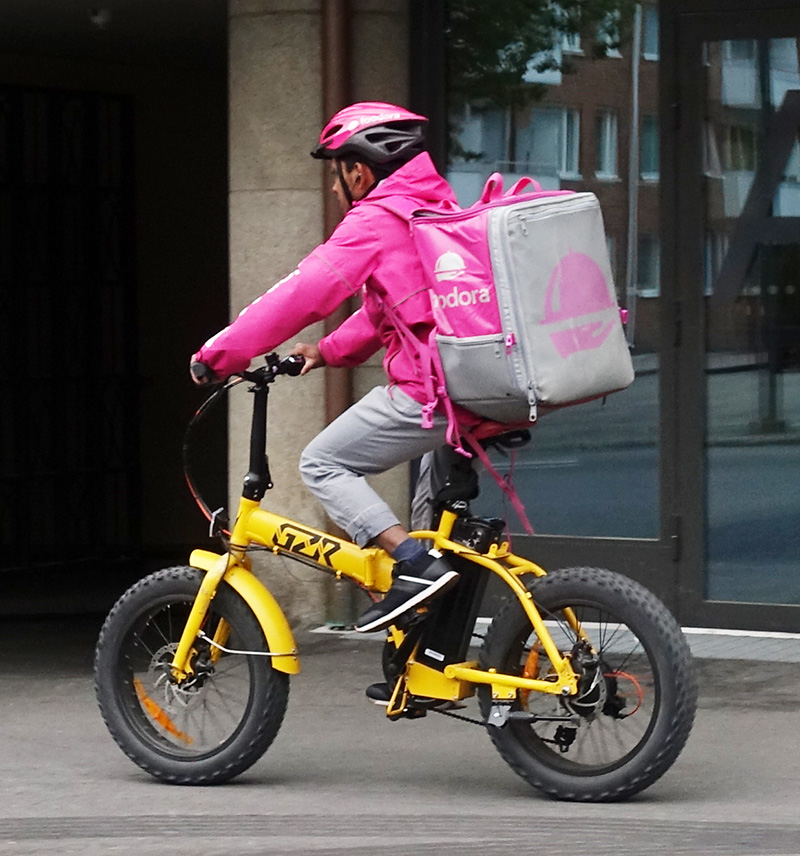
In mid-March 2020, the Ontario government declared ‘a state of emergency’ in response to the COVID-19 pandemic. Delivery gig workers had been suddenly reclassified as essential workers, delivering food to people’s front doors during lockdown, while risking exposure to the virus. The demand for food delivery services had increased to a level never seen before. And Foodora, one of the main food delivery platforms, abruptly decided to exit the country. Gig platforms have tried hard to create the image of gig workers as side-hustlers, part-timers, or those who use the work as a hobby to make extra money and who are thus free to hop from one platform to another whenever they want. If gig workers are deemed to be so autonomous and independent, what happens to them when a global platform leaves? Despite the platform’s clear desire to be a neutral mediator, I found in my recent study that Foodora was not able to depart without leaving a trace. Many of the local workers who depended for their livelihood on Foodora spoke of the significant impact of its exit. Their stories directly challenge the claims of platforms that they are not a part of the local economy or of workers’ lives.
Working paper: Organizing across difference? Worker heterogeneity and the politics of solidarity in unionizing platform couriers in Seoul (analysis ongoing; target: Social Problems)
Research on platform labour movements has focused on organised labour: the conditions under which workers organise (Lei 2021; Mendonça and Kougiannou 2025), and how they organise, through forms of action and strategy (Cini et al. 2022; Johnston and Land-Kazlauskas 2018; Lee 2025). Less is known about whether, and how, a union can organise across worker heterogeneity in the platform economy, including full-time and part-time, economically dependent and less dependent workers. The article shifts focus from relations between workers and platforms to relations among workers, and between the union and those it did not organise.
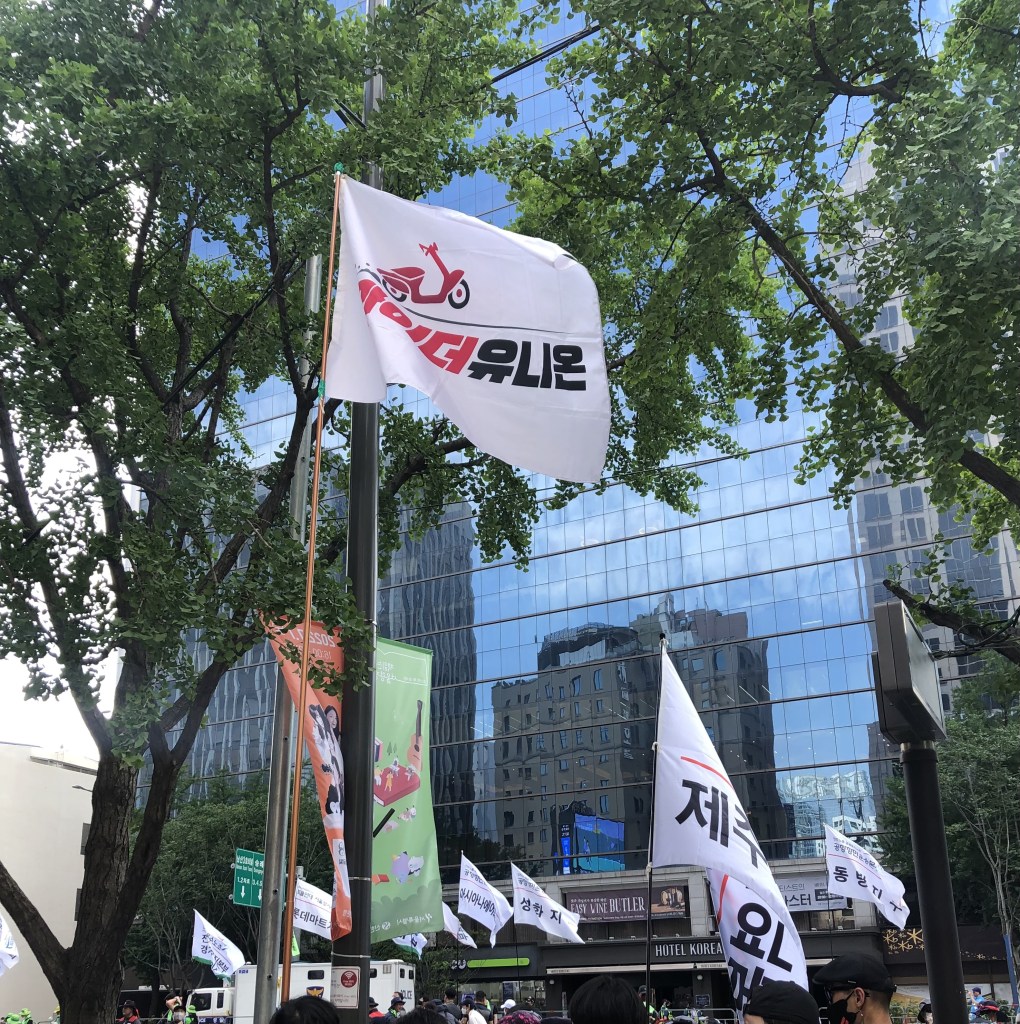
Baemin, Seoul’s biggest food delivery company, runs a two-track system: an economically dependent full-time “Rider-track” and a flexible part-time “Connector-track”. This platform-designed segmentation layers differences in economic dependence, platform loyalty and means of labour, which map onto social positions such as gender and class. Drawing on 11 months of ethnography (2022-2023) and 46 in-depth interviews in Seoul, South Korea, I analyse Rider Union and the couriers it did and did not organise. The union tried to organise across this segmentation by promoting collective consciousness and tailoring demands to different worker groups. And yet, it succeeded only with full-time, economically dependent couriers, who were working-class Korean men, and not with part-time couriers, including women and working mothers. Full-time couriers responded to part-timers with antagonism. Part-timers responded to full-timers with indifference and a weak shared worker identity, while some criticised the union for working only in favour of full-timers. This study considers the limits of unionization based on class consciousness and shared identity. The presupposed a single worker subjectivity that not everyone shared, and platform-led segmentation deepened the differences. It suggests that organizing across difference may require broader social movements that challenge the platform economy, cut across economic dependence, worker subjectivities and social positions, and possibly involve stakeholders beyond workers, such as customers. The article aims to contribute to research on worker heterogeneity and solidarity in the platform economy by showing how workers perceive divisions among themselves and how a union tackles them, with possible implications for the wider non-standard workforce.

